
Oregon Recent Arrests Statewide
Oregon has no single page for every arrest. County sheriffs and jail operators publish the first booking view. One screen lists adults in custody right now. Another keeps a dated arrest history, while a third is a press log about police activity. A press log can include an incident that never led to a jail booking. People also leave a current roster after release. The arrest report and court case still remain. These differences matter when you search Oregon recent arrests, because a page label alone does not reveal the record type, date range, or photo policy.
Use the county directory to pick the place that accepted the booking. Then read the source's own date and custody labels. Counties run sheriff pages, vendor systems, PDFs, and regional jail portals. Some show no photo. Others post an image link under their own policies. The NORCOR system serves five counties through one custody view, so don't mistake it for five separate feeds. Verify a live entry with the county source itself.
| Statewide pattern | Example source | What it means |
|---|---|---|
| Current custody | Jackson County AIC | Shows people in custody when searched; it is not a complete arrest archive. |
| Arrest history | Umatilla County arrests | A 30-day search route, with no booking photos in the public view noted by county research. |
| Regional roster | NORCOR adults in custody | One regional system covers Gilliam, Hood River, Sherman, Wasco, and Wheeler. |
| Roster PDF | Union County roster | A document-based view can differ from a searchable vendor page. |
Note: A current-custody result can disappear after release even when the related booking record remains with its custodian.
Route an Oregon Arrest by County
Arrest county and booking county can differ. That happens when an agency uses a regional jail or transfers someone for custody. NORCOR is the clearest case. Gilliam, Hood River, Sherman, Wasco, and Wheeler all use the regional system. Morrow routes custody through Umatilla County. Wallowa points toward Union County Community Corrections and regional routes. Start with the stated booking destination when known. If the destination is unclear, check the neighboring or regional route as well as the county where the event occurred.
The Oregon directory holds 36 county destinations. Each row names the county seat and links to that county's local recent-arrests site. The local page narrows things to a sheriff, jail system, arrest log, records unit, or city police agency. Nothing here merges those pages into one database. The county route is a handoff to the custodian's own source, where the access window and limits are visible.
Who Was Arrested in Oregon Today?
Start by finding the county or regional jail that accepted the person. Open its current roster or same-day view. Note the posted window. Search again if intake may still be underway. Deschutes runs its JailTracker route, Jackson keeps an AIC page, and Umatilla adds a separate arrest-history view. Those are different source types. That is no guarantee of full or timely coverage. A missing entry has several explanations. The booking may not be processed yet, the person may be released, the source may not cover that agency, or the page may lag. None of that proves no arrest occurred. Call the jail or records unit if timing matters, then request the record from the agency that created it. The Arrested Today page maps same-day systems statewide and lays out the routing sequence. VISOR helps track custody, supervision, and alerts, but it is not a complete fresh-arrest feed.
| View | Typical record stage | Next step |
|---|---|---|
| Current custody roster | People held when the page is checked | Confirm a fresh booking with the jail if it is not yet visible. |
| Same-day or short-window query | Arrests or bookings within the source's stated dates | Check the window label and search fields; the label may not mean 24 exact hours. |
| Multi-day press or incident log | Dated events, which may not include a jail booking | Use the named agency or court for custody and outcome. |
Use the exact search fields a county page gives you. Umatilla's arrest interface asks for start and end dates plus a first and last name. The Oregon DOC form runs on name fields and SID. VISOR also accepts a county ID. These systems do not talk to each other. A county ID is not an OSP report number. Entering one in the wrong field will just slow the search down.
Does no roster result mean no arrest? No. Intake may still be underway, or the person may have been released. Confirm with the custodian that made the booking record.
- Identify the arresting agency and the county or regional jail named in its release or report.
- Open that custodian's current roster or dated arrest view, then note the search window and fields.
- Compare identifiers and booking dates carefully. Treat a charge as an charge, not a court finding.
- If a match is missing or unclear, contact the jail or records unit and ask for the relevant public record.
Save the multi-day page for dated reports and archives. It may cover activity that never led to custody.
Confirm custody with the county. Booking views update at different points in intake, and a later roster search may no longer show someone who has been released.
Where Oregon Arrest Reports Appear
Start with official systems. They tell you the agency, the record type, and how fresh the data is. The Oregon State Police newsroom posts selected incident releases and links to FlashAlert, but there is no public statewide daily arrest or dispatch ledger from Oregon State Police. Turn to court search for the case and disposition rather than the jail event. When a page is missing or has aged out, the county records unit is the next route.
| Channel | Record stage | Source limit |
|---|---|---|
| County jail roster or arrest query | Current custody or a stated recent-arrest window | Coverage, fields, and photo access vary by county. |
| Oregon State Police news releases and FlashAlert | Selected, dated state-police incidents | Not a complete statewide booking list. |
| Oregon Judicial Department case search | Filed case activity and court outcomes | Some cases are restricted or not online; a booking may not yet have a case. |
| Oregon DOC Offender Search | DOC custody or supervision | Not a county arrest feed. |
| Regional and local newsroom blotters | Dated incident reporting | Secondary reporting is not a custody record. |
Need a wider date range? The Arrest Reports page compares multi-day blotters, agency news releases, and archives. A dated report may describe a citation, warrant service, or incident. It may do so without any booking. A custody roster may list a booking. It may be tied to an older warrant. Keep those records apart; do not merge them into one count.
Note: A source's date stamp describes that publication, not necessarily the time the arrest took place or the time a booking was entered.
Oregon Warrants and Wanted Lists
No single statewide search proves that every Oregon county warrant is active. At the state level, the public wanted source is the Oregon DOC Most Wanted page. It lists people reported as escapees, absconders, or otherwise wanted. The connection is DOC custody or supervision. Those entries are agency alerts. A list can change after a person is located or a status changes.
The U.S. Marshals Service District of Oregon also runs a profiled-fugitives page. It currently lists no fugitives. That page state can change. It is not proof that no federal fugitive investigation exists. For a specific court warrant, contact the issuing court or law-enforcement agency. An attorney can also confirm the record. A third-party result may be stale. It may also refer to someone with a similar name.
Safety comes first. Never approach, follow, confront, or try to arrest anyone named in a notice. Call 911 for an immediate threat. Use the named agency's official tip channel for other information. The DOC wanted page gives a tip telephone and email route. The U.S. Marshals Service posts its own tip instructions. A warrant check should route a question to an authority and a safe resolution. It should not support evasion.
Open the Oregon DOC Most Wanted page to review its current notice and contact route.
Note: A wanted notice is a safety alert from its issuing agency, not a substitute for a court docket or final disposition.
Oregon Mugshots and Booking Photos
Oregon has no uniform public mugshot feed. Many county roster pages show a name, booking date, or charge. They leave out the booking image. Umatilla's public arrest and custody views are documented as no-photo routes. NORCOR's regional custody page, though, can expose image links. That outlier sets no policy. It binds neither its five member counties nor the rest of the state. ORS 133.870 generally restricts a law-enforcement agency's release of a booking photo. The exceptions are defined. They include an agency's law-enforcement purpose and a resulting conviction. A roster can still be useful even without a photo.
A county booking photo is an identification image made at booking. It is not the same record as a DOC profile photo or a historical prison portrait. Oregon DOC's search can show a profile image when one exists for a person in state custody or supervision. It is not a county booking source. No photos are copied into this page. Follow the source link to read its policy. When an image is not posted, use a records request for a permitted record.
The official Oregon Revised Statutes, chapter 133 holds the current booking-photo rules. The chapter page displays the statute text. Agency access still depends on the listed exception and the custodian's decision.
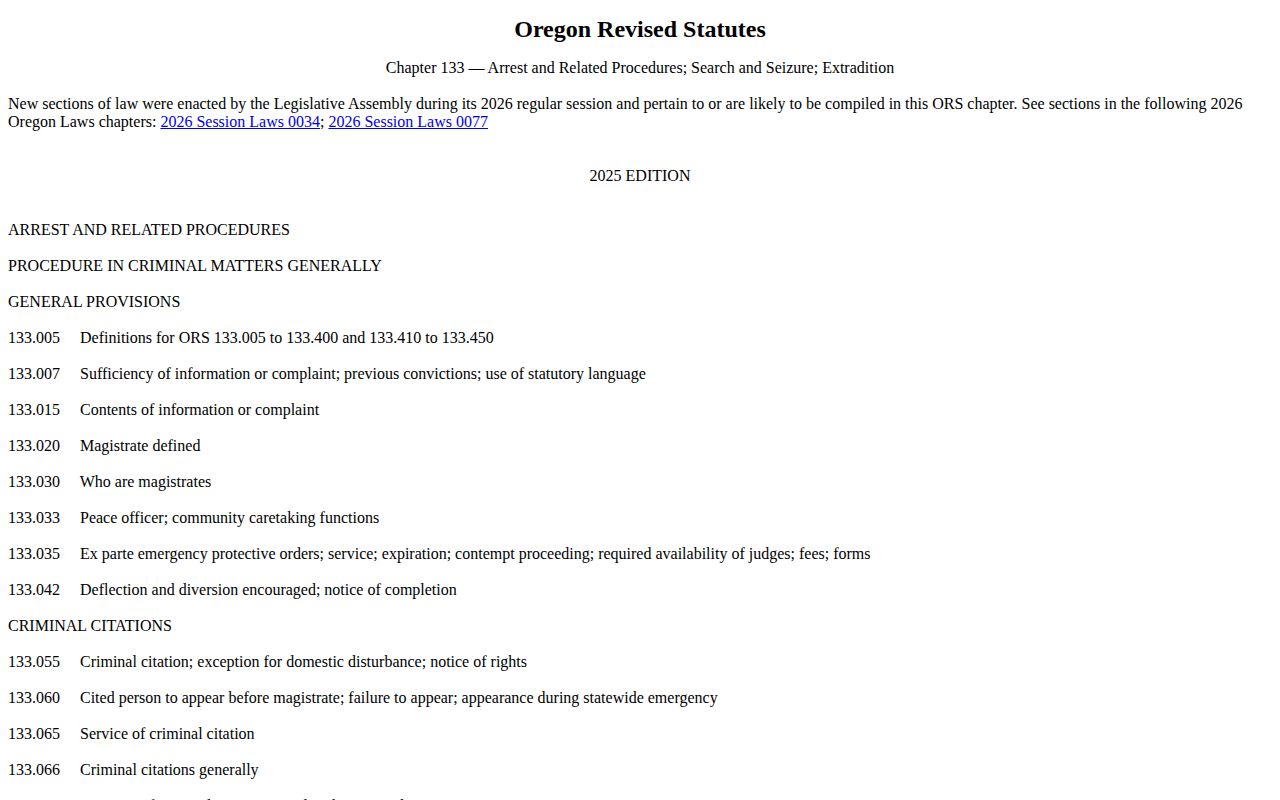
Read the current statute text before relying on an older summary, since later legislation changed the rules.
Note: A name may remain in a booking record when the agency does not publish an image or when the person has left custody.
What an Oregon Arrest Record Shows
A booking file begins at the county layer. It may include a booking date, name, charge as entered, case or booking number, and bail information. A scheduled release field may also appear. County examples show the field set varies from place to place. A live custody interface may drop a person after release. A public-records request can seek the underlying county record. Redactions, confidentiality rules, and the agency's retention schedule still apply.
The state DOC record is a separate trail. Oregon Offender Search covers DOC custody or supervision, not a fresh county booking. Its public profile can hold a DOC or SID number, name, and status and location. Personal-description fields may appear too. Sentence or offense details and an image may appear when one exists. The exact display varies. A person may move from county custody to a DOC record after sentencing. A DOC search does not replace the booking file or court docket.
| Record field or stage | What a reader may see |
|---|---|
| Name and identifier | Name plus a booking number, case number, county ID, DOC number, or SID where the system provides one. |
| Booking event | Booking date or arrest date, with the source's own time and status labels. |
| Charge and bond | Charge as booked and bail or bond fields when the county display includes them. |
| Custody status | Current county custody, transfer, release, or DOC supervision. These are not interchangeable. |
| Image | A county booking image only if posted under the agency's policy; a DOC profile photo may appear in the state search. |
| Court outcome | Case events and disposition belong to the court record, not a roster entry. |
Compare two systems. The NORCOR adults-in-custody page uses booking and status fields, while a DOC profile follows state custody or supervision. Each describes a different stage of a person's case.
The live NORCOR interface displays a regional custody roster. Its structure shows why a county route may point to a shared system.
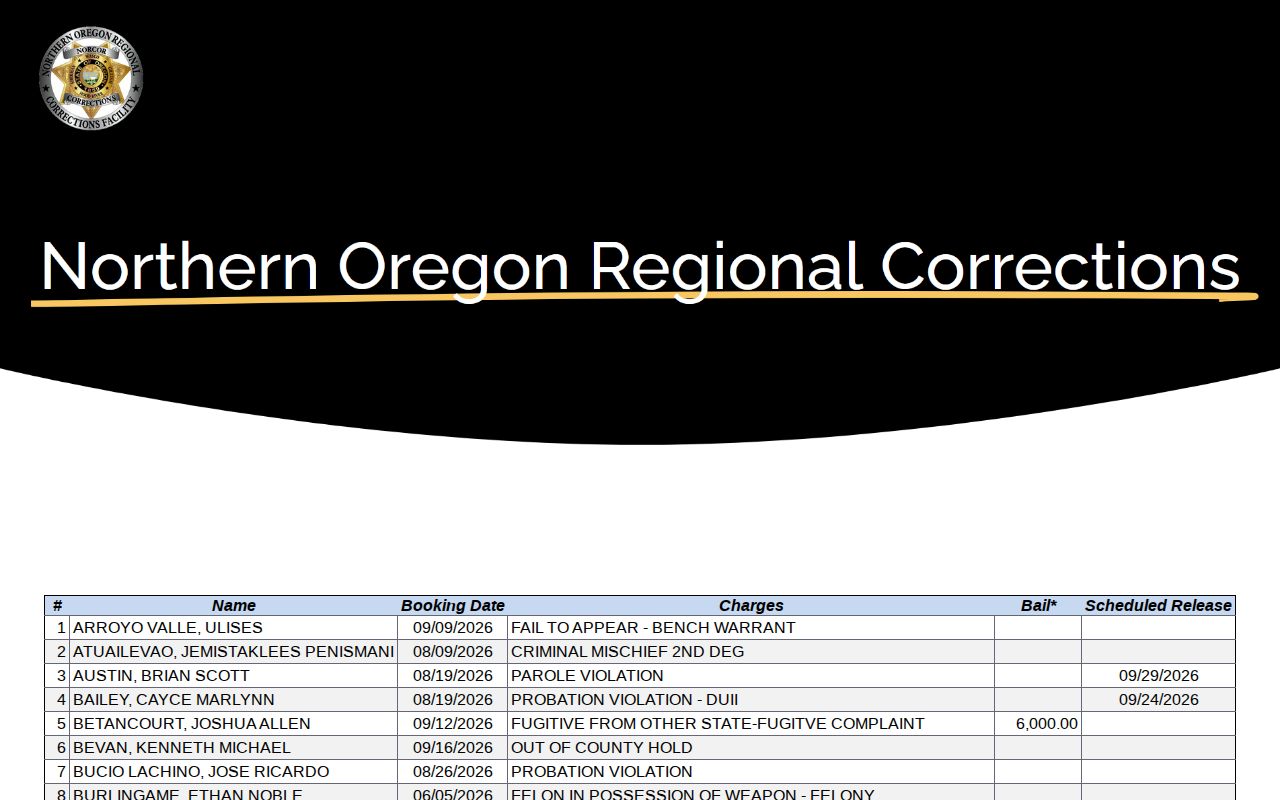
Read each entry's own status labels before you count it as a current arrest.
Where Oregon Booking Photos Appear
Go to the source first. The sheriff's office, jail, or regional operator made the booking entry. That agency controls the original record. If the roster shows no photo, ask the custodian directly. Oregon law decides whether release is permitted. The state DOC offender search can display a different kind of profile image. That applies to someone under state supervision. Newspapers sometimes run booking photos in a story. Treat them as editorial content, not custody data. Unofficial sites form a second layer. Their coverage is often partial or stale because they copy older records rather than a live county feed. RecentlyBooked's Oregon page lists county links on a roughly 30-day horizon. That says nothing about complete state coverage. Mugshots.com carries an Oregon section that is also secondary. Busted Newspaper offers an Oregon-tagged example. Arrests.org posts partial county links with dated entries. Mugshots.zone shows no Oregon state section or free route.
| Photo channel | Status | Use with care |
|---|---|---|
| County sheriff or jail source | Official record custodian | Photo release is limited by Oregon law and local policy. |
| Oregon DOC search | Official state custody or supervision profile | Not a county booking photo or new-arrest feed. |
| RecentlyBooked Oregon | Unofficial partial index | Its Oregon page describes a roughly 30-day horizon; coverage can change. |
| Mugshots.com and Busted Newspaper | Unofficial secondary sites | Check the originating record; do not treat their pages as current agency data. |
| Arrests.org and Mugshots.zone | Partial or unverified state coverage | The research did not verify an Oregon-wide complete feed or a published free route for both. |
RecentlyBooked's Oregon page works as a secondary county index rather than an agency roster. The image illustrates that index layer only.
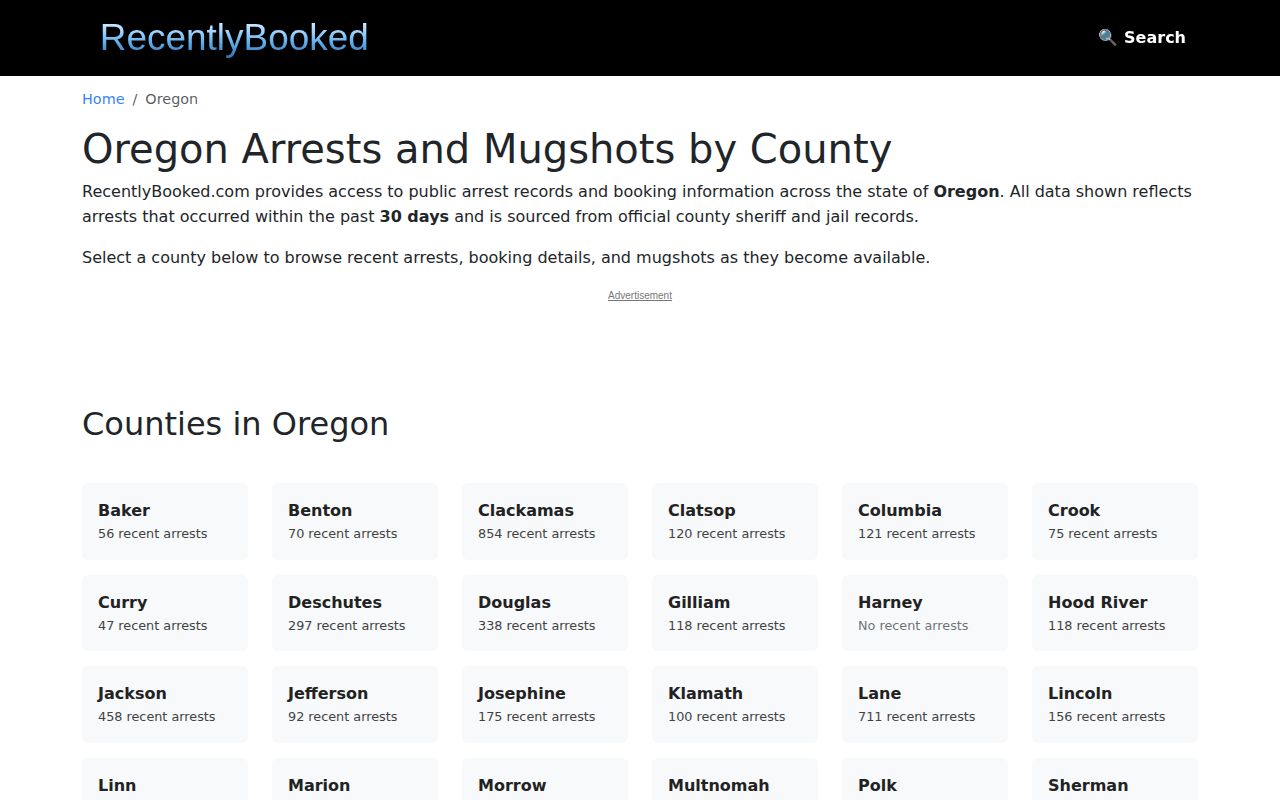
A copied page can lag behind both sources. The county custodian holds the original entry, and the court holds any filed disposition. Mugshots.com's Oregon section is another unofficial index. It displays its own site information, not a government record or any statewide promise of current coverage.
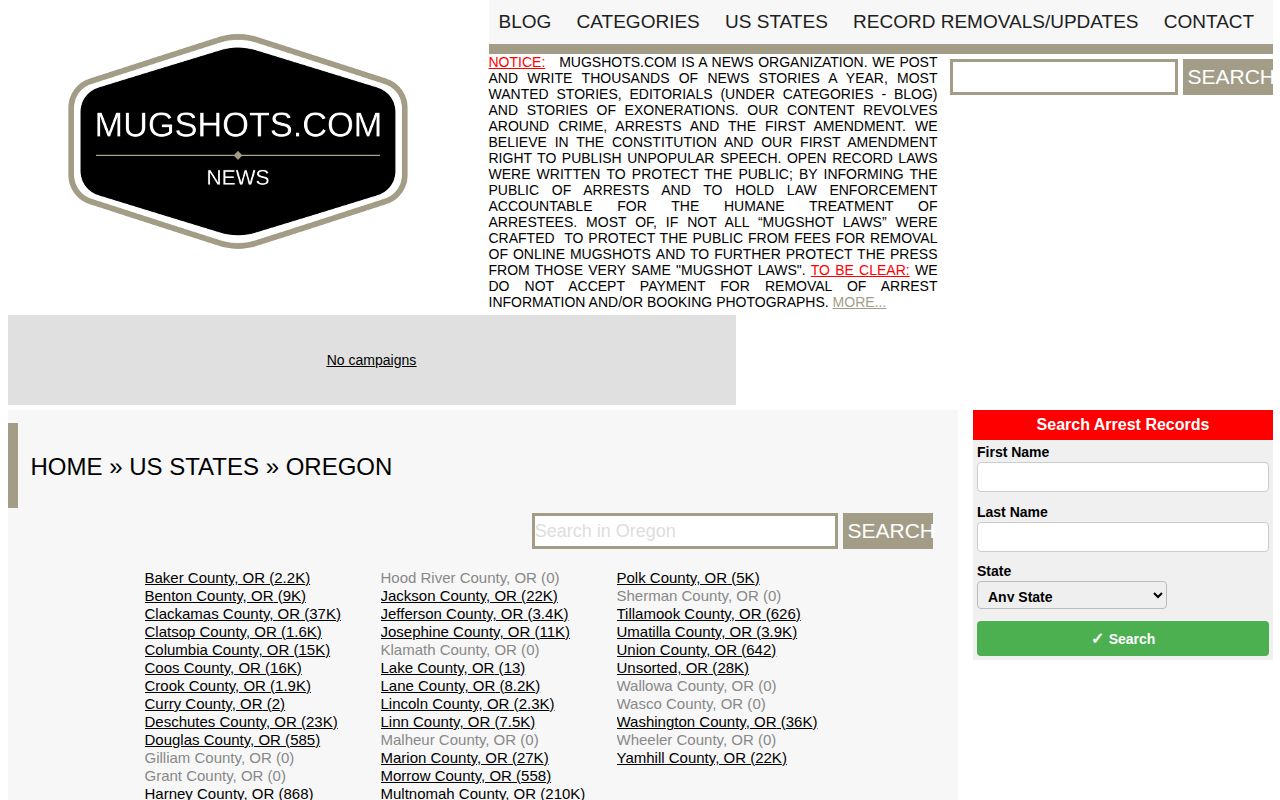
Each publisher sets its own correction policy. None of these routes changes a county record, seals a case, or forces a search cache to refresh. Some publishers do offer free correction paths. RecentlyBooked's policy covers qualifying wrong, outdated, duplicate, sealed, expunged, juvenile, or legally restricted entries. Mugshots.com's maintenance policy describes free requests for specified records with supporting documents. Busted Newspaper's removal form accepts a post URL and disposition records. Its public form names no fee. Read that as silence, not a guarantee. Newsrooms also take free correction requests, though editorial staff decide whether a story gets updated. Oregon's statutory route stands apart from every publisher policy. Use the actual statute and court papers. Deleting one web copy does not erase the official record, a social repost, or a search engine's cache. Skip any middleman who claims otherwise.
Note: A third-party entry can remain online after a county roster has changed, so compare it with the originating agency and court.
Request an Oregon Booking Record
Oregon's Public Records Law allows inspection of public records, subject to exemptions. Name the custodian in your request. Describe the incident, date range, record type, and preferred format. Add a case number or a location when you know it. It narrows the search. Ask for an estimate first. Request a written explanation if the agency redacts or withholds anything. Remember that a booking-photo request still runs through ORS 133.870.
- Use the directory to find the county sheriff or jail custodian for the booking. Ask for the booking record, arrest report, or photo as separate items, and include the person's name and approximate date.
- For an incident handled by Oregon State Police, use its Public Records Requests page or the linked form. Do not send a county jail request to OSP if the county created the booking record.
- State a preferred electronic format and ask for a fee estimate. Oregon law calls for acknowledgment or completion within five business days, with a further response period after acknowledgment; agency workloads and legal exceptions can affect completion.
- Review the response for a release, redaction, or stated exemption. If denied, ask the records officer to name the review or appeal route; the Oregon Public Records Advocate also lists request resources.
OSP posts its fee schedule. The first 30 minutes of staff time cost nothing. After that, rates run $25 clerical, $40 managerial, and $75 professional per hour. Actual costs can be added on top. Plan for a wait. OSP says requests can take 30 days or longer depending on workload. Those rates and timelines belong to OSP, not every county. The agency may also consider a public-interest reduction. A record can be redacted or withheld for an open investigation or protected personal information. Juvenile material, sealed records, or another legal exemption can also block release. The official Open Oregon Public Records Guide explains how to frame a request. Skip bulk face images and any identifying details about minors.
Note: The custodian that created a report is usually the right first stop, while a court clerk holds filed case records and outcomes.
Oregon Arrest and Photo Law
Oregon's booking-photo statute creates a two-part rule. ORS 133.870 limits what a law-enforcement agency may release, while ORS 133.875 sets duties for a publish-for-pay publication that seeks consideration to remove a booking image. The general public-records law does not make every photo automatically available. The listed exceptions include a law-enforcement purpose, a court process, a victim, the depicted person, certain licensed investigators, and a conviction arising from the same arrest. An exception permits release in its stated setting; it does not require every agency to post a photo online.
Oregon's 2021 HB 3273 established the main framework, effective in 2022. The 2025 SB 993 amendment added a licensed private investigator to the permitted recipients. Under the current statute, ordinary removal requests to a publish-for-pay site have a 30-calendar-day deadline and may carry a fee capped at $50. A favorable disposition with documentation, such as acquittal, no prosecution, set-aside, vacatur, or pardon, triggers a separate seven-day removal rule with no fee. The statute states different daily damages after the relevant deadline. These are current-law descriptions; older articles may not include the 2025 change.
Adult set-aside under ORS 137.225 is a court process with outcome-specific waiting periods and eligibility limits. A court order can seal qualifying official records, but it does not erase every scraper copy or search cache. Juvenile records follow a separate confidentiality and expunction framework. No source reviewed supports a claim that Oregon automatically removes all arrest photos after release or dismissal. For a full explanation of the statute, publisher routes, and stale copies, see Arrest Records Law.
Booking lists a charge. That charge is only a starting point. A court may dismiss it, reduce it, or resolve it another way, so the official case record tells the real story.
Oregon Records After Arrest
Booking is where the paper trail splits. A jail roster tells you who is in custody. A court docket shows the filed events and the final result. Oregon's free basic search and calendar tools sit on the Find a Case or Court Record page of the Oregon Judicial Department. OJCIN offers broader access for a fee. Courthouse terminals are a third option. Some case types stay hidden, including juvenile, adoption, and mental-health matters. A booking can also precede any filed case, or the matter may move through a court system that the public search never displays. The Oregon Judicial Department's case-search instructions lay out those three routes in plain terms.
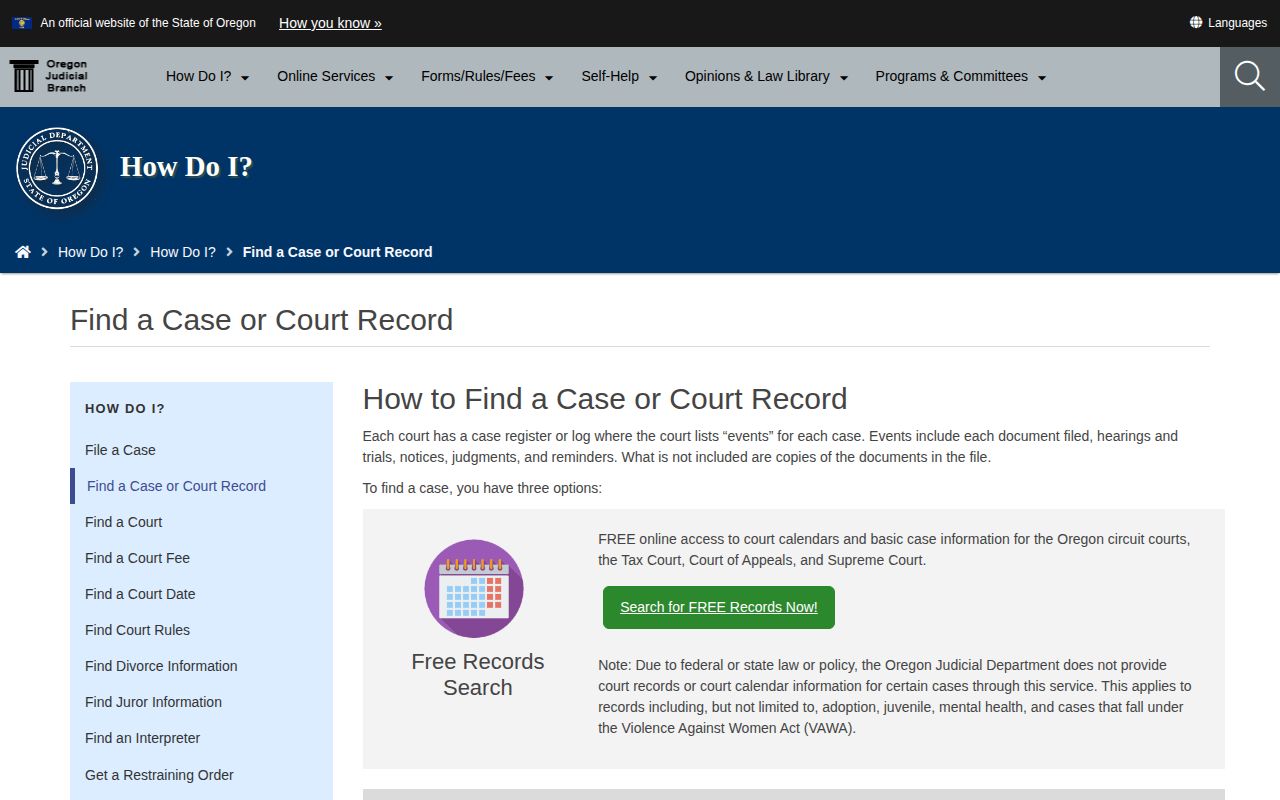
The court route shows filed events and outcomes. It is not a same-day jail roster. State custody is a different search. For a person serving a state sentence or under DOC supervision, use the Oregon DOC Offender Search. It takes a name or an SID. Results may show custody status, location, sentence information. A profile photo appears when available. None of that proves a new county arrest. The Federal Bureau of Prisons locator covers federal custody from 1982 onward and returns no public mugshot. The ICE detainee locator serves a different immigration-custody group and is not an Oregon jail roster.
Older records take yet another path. The State Archives guide describes county prisoner registers listing entry date, arresting officer, charge, bail, court, release date, and remarks. Inventories reach through 1965. ORS 192.496(3) adds a 25-year restriction after custody ends. The DOC guide covers historic inmate registers, case files, and some separated photo collections. These are uneven historical records, not a searchable archive of modern Oregon mugshots. Start at the Oregon State Archives records page and check the county or agency guide first. Give staff a name, an approximate period, and the institution. Ask about access, copy cost, and timing. For a modern booking the Archives does not hold, return to the county custodian under the Public Records Law. Read the Oregon Historical County Records Guide before requesting an older jail register.
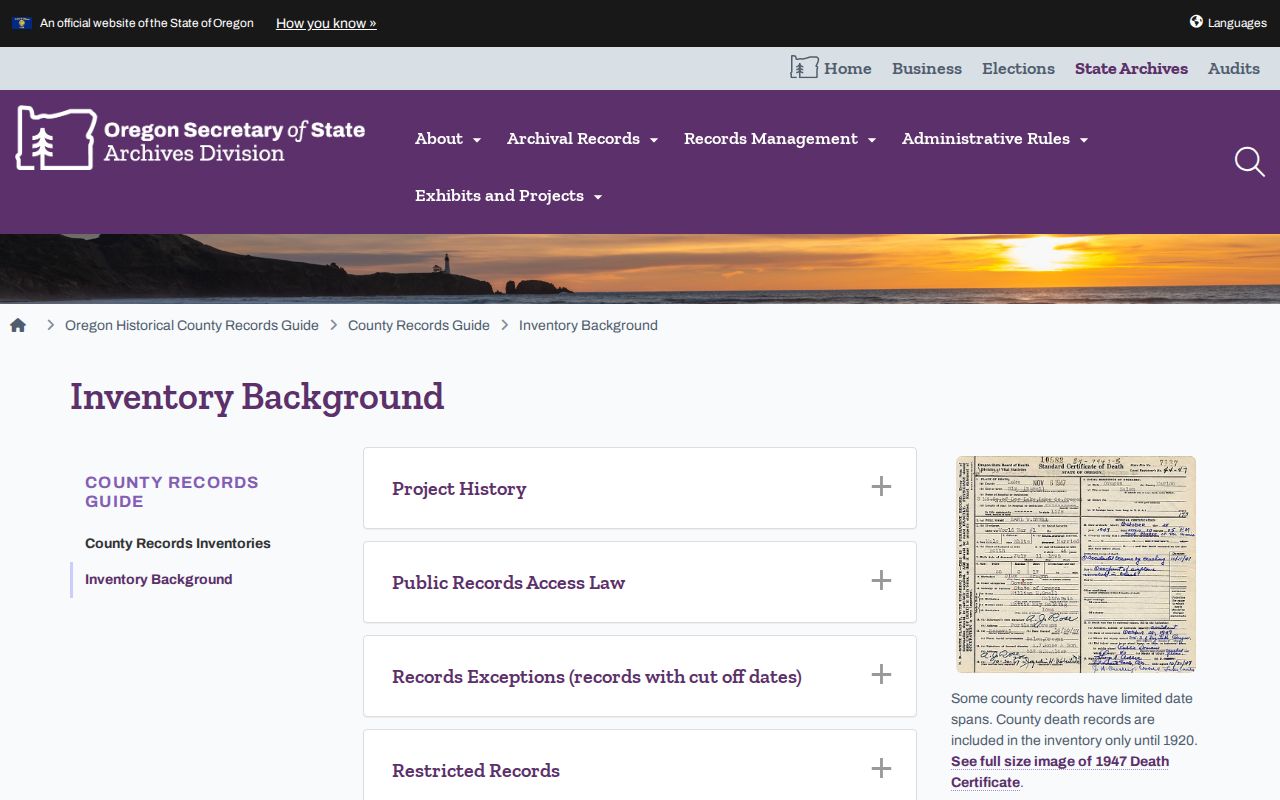
Some record series have access limits or gaps in their date spans. Always check the repository's current instructions before ordering a copy. The BOP locator is a separate federal route. It offers number and name searches. Its results include no public photo. Open the Federal Bureau of Prisons inmate locator for federal custody information.
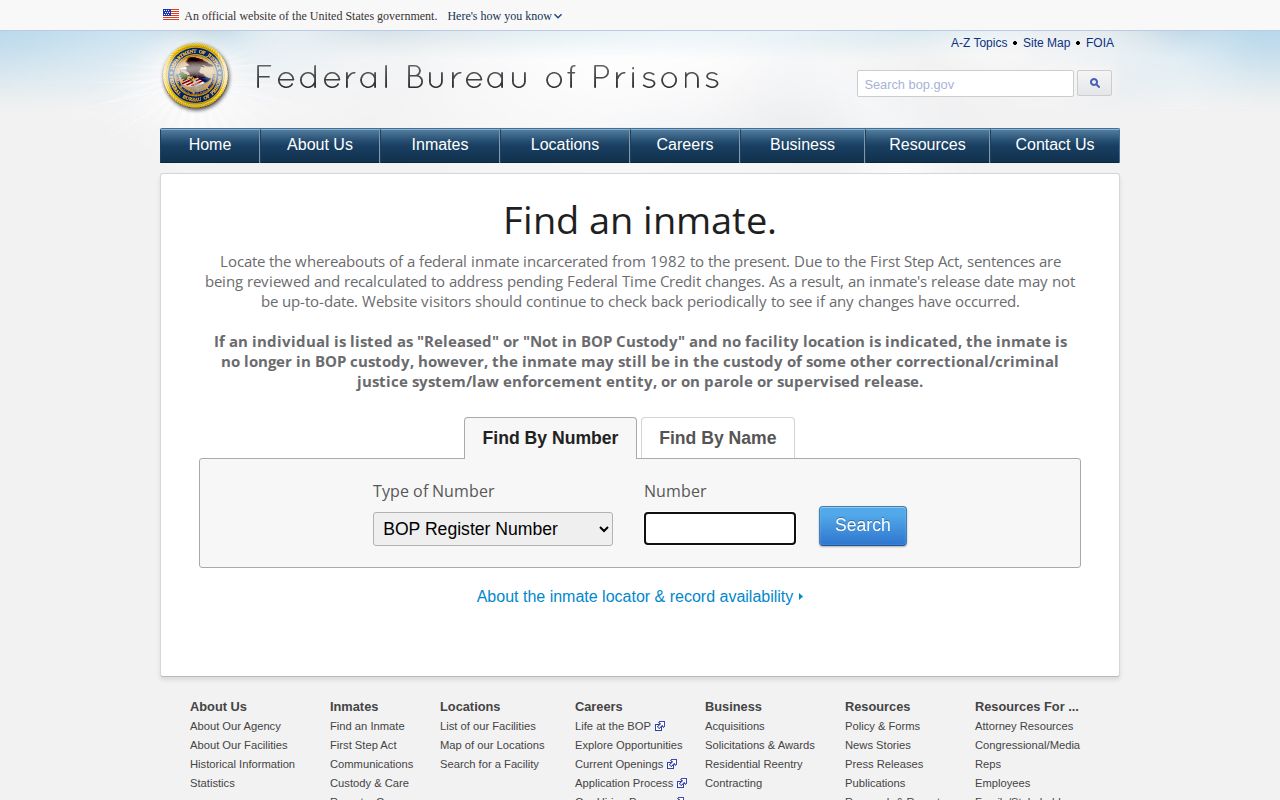
A BOP result is not an Oregon county booking. A released status may mean the person sits in another system or is simply out of federal custody.
Note: Historical retention shows that a record may exist, but its age does not guarantee public access or a surviving photograph.
Oregon Custody Search Limits
The DOC search traces a post-sentencing trail, not a live county roster. Its form takes a full or partial name. An SID number works too. A result can show custody or supervision status, location, identifiers, offense or sentence fields, and an image when available. The county booking-photo statute does not automatically govern a DOC profile image, which is a separate record type. Match the system to the custody stage. State custody or supervision calls for the DOC search. A recent arrest points back to the county jail or the arresting agency. A court result belongs to OJD. Federal custody means BOP or the ICE locator. That order avoids a common mistake: treating one empty database as proof that no arrest, booking, or case exists.
The Oregon DOC Offender Search is an official lookup by name and SID. Its page shows the form, not a profile.
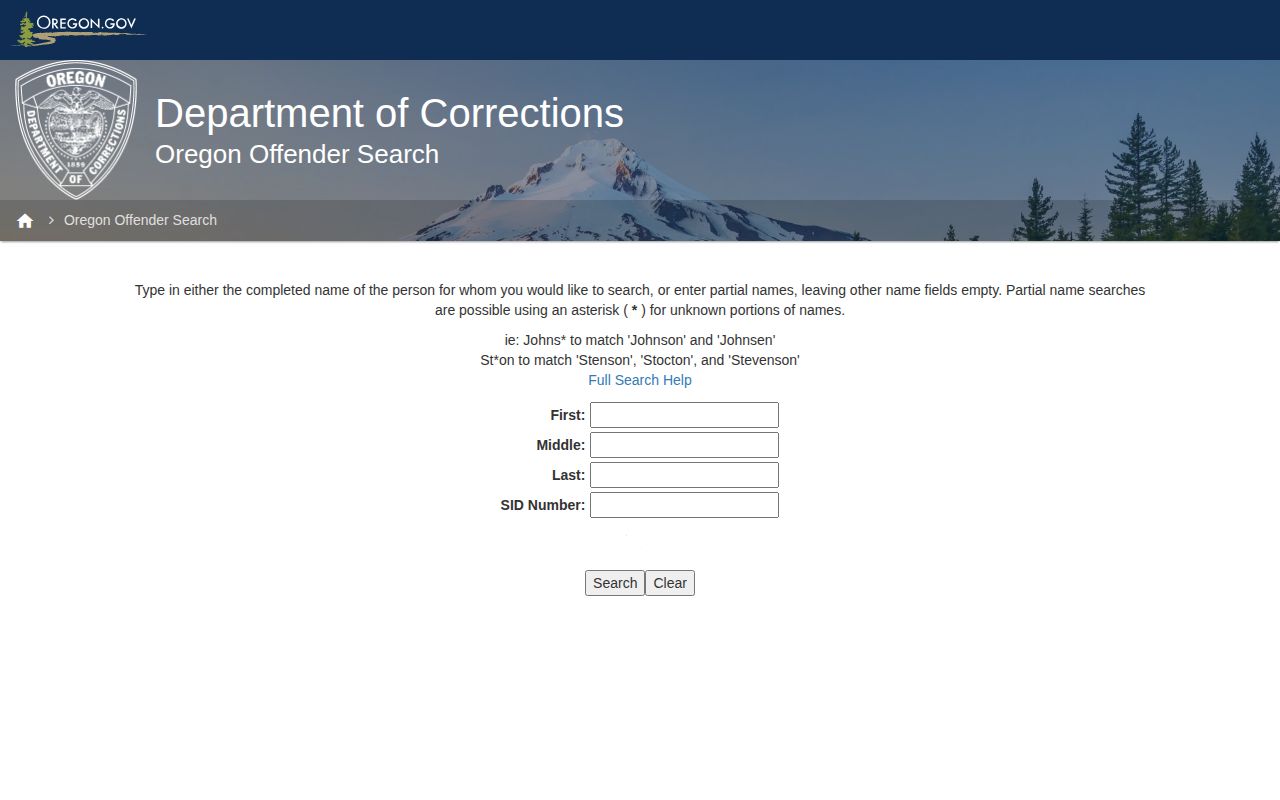
Use only the system that matches the custody stage. Then verify any result with the agency that keeps the record.